
Why Going Home Feels Different After Years Abroad
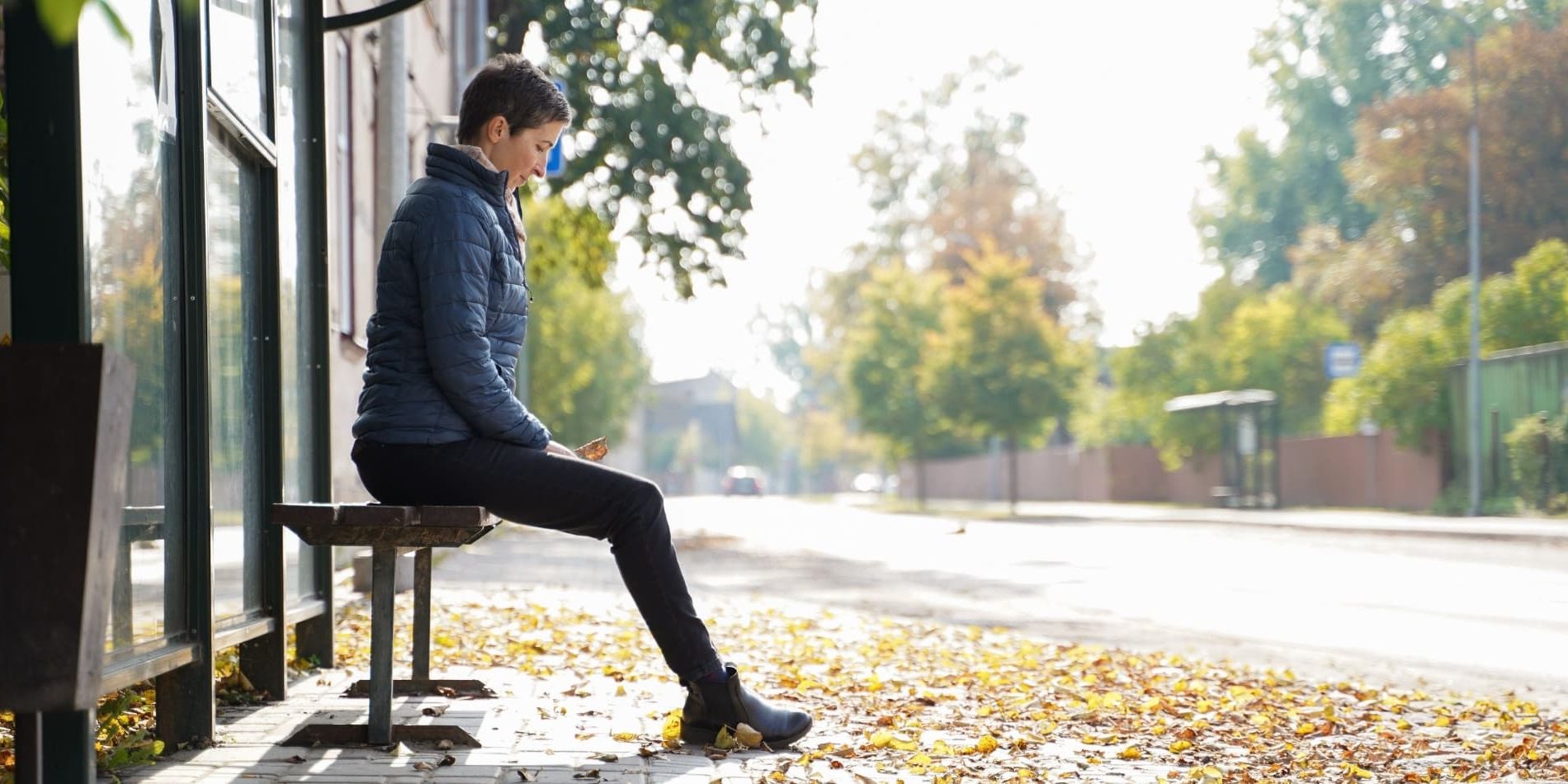
The bus that no longer comes.
I was already in Belgium when I found out.
I had been planning the next day. A simple thing. A bus from my parents' street. The same line that had always been there, that had made our visits workable, that had given us the freedom to move around without a car. I looked it up and it was gone. Not delayed. Not temporarily suspended. Gone. The line had been abolished.
I sat with that for a moment.
Not because of the inconvenience, though that was real. My husband cannot drive. We had been depending on that bus. But what unsettled me more than the practical problem was something quieter. The feeling that I had not known. That something significant had changed in the country I grew up in, something that affected daily life for people on that street, and I had not had any idea.
That is what going home after living abroad actually feels like, after years away.
The country that changes without you
There is a particular quality to the gap that opens between you and your home country when you have been away for a long time. It is not the gap of missing things. You expect to miss things. You prepare for that, in a low-level way, before every visit.
What you do not prepare for is the gap of not knowing. The discovery that the place has been moving forward without you, making decisions, shifting, removing things and adding others, and that you were not part of any of it. You were not consulted. You were not even informed. You find out when you arrive and reach for something that is no longer there.
For me, it was a bus line. For someone else, it is the shop that closed, or the neighbourhood that changed character, or the conversation at a family dinner that reveals a shift in how people around you think about something you believed was settled.
The form changes. The feeling is the same.
You are out of touch. And you did not choose to be. That is what makes it sting.
This is one of the quieter dimensions of living between cultures. Not the dramatic part. Not the part that makes a good story at dinner. The part that arrives on an ordinary Tuesday when you look something up and realise the country you carry inside you is not the same as the country that exists.
The strange position of the person who left
When you live abroad, you carry two versions of your home country inside you.
The first is the country you left. The one that is fixed in your memory at the moment of departure, or shortly after. This version does not update automatically. It requires information, presence, attention. Without those things, it stays more or less where it was.
The second is the country you visit. The real one. The one that has kept going, absorbing changes, making small and large decisions, becoming something slightly different from what it was when you last lived there properly.
Every time you go back, you are doing a kind of recalibration. Measuring the distance between these two versions. Updating the first one, slowly, piece by piece.
The bus was one piece. A small one, practically. A larger one, emotionally.
Because it was not only about transport. It was a reminder that the country I hold inside me is not the same as the country that exists. This is part of what grounded identity means when you have been living between cultures for years. Your sense of self does not anchor to one fixed place. It has to grow roots that span more than one country, more than one version of home.
What this particular disorientation is
I want to be precise about this, because it is different from other kinds of disorientation that come with living between cultures.
In the country where you live now, you expect not to understand everything. You have accepted, at some level, that social signals will sometimes miss you, that you will sometimes misread a situation. That disorientation is familiar. You have built ways of holding it. If you want to read more about why this happens, the article on interpretive confidence looks at exactly this: why reading a room becomes harder when you live across more than one cultural context.
The disorientation of going home is different. Because you did not expect to need those ways of holding it here. You thought you were returning to solid ground. To the place you understood without effort.
And then you find out about the bus.
Or whatever it is for you.
And you realise that the solid ground is not quite as solid as you thought. That belonging here requires maintenance too. That you cannot simply arrive and slot back in. That you have also become, in some small and significant ways, a visitor.
There is something quietly ironic in this
I live in Nepal. When I tell people this, there is often a particular look. A slight widening of the eyes. The sense that Nepal is the difficult place, the far-away place, the place where things do not work as expected.
And I returned to Belgium and discovered a bus line had been abolished from a residential street.
The country I left is not the country I return to. And the country that most people assume is solid and reliable and unchanged can also quietly remove the thing you were depending on, while you were away living your life somewhere else.
This is not a criticism of Belgium. Every country makes its decisions. The bus line is a detail, one of thousands of small changes that accumulate over years.
But it is a small, precise illustration of something true. That home is not a fixed point. It is also a place in motion. And when you are not there, you do not get to witness the motion.
This connects to something I wrote about in a different piece: the particular weight of booking a flight home. The anticipation before you go back carries so much. The image of home you are returning to. The version of yourself you hope to step back into. The bus being gone is one of the moments where that image meets reality, and the gap becomes visible.
What helps
I do not think there is a way to fully close the gap. Nor do I think the goal is to close it.
The gap is honest. It reflects something real about the choice you made, or the circumstances that shaped your life. You left. Time passed. Things changed. That is not a failure. That is what happened.
What helps is naming it.
Not in a dramatic way. Not in a way that turns a missing bus line into a referendum on your choices. But in a quiet, accurate way. Being able to say: I am out of touch with this, and that is a real thing, and it makes me feel something.
Because the feeling is real. The sense of having missed something, of going home after living abroad to find that the country kept moving while your version of it stood still, is a specific kind of grief. Small. Recurring. Rarely spoken.
It sits inside what this platform calls life stability: the question of what belonging and stability actually look like when your life spans more than one country. This is one of its quieter expressions. Not the dramatic version of that question. The ordinary Tuesday version.
If this resonates
If you have had moments like this, small moments where home felt unexpectedly foreign, I would like you to know that they are not incidental. They are part of the inner experience of living between cultures. Not the hardest part, perhaps. But a real part. You can read more about that inner experience in the free guide Why Women Living Between Cultures Start Doubting Themselves, which looks at why this kind of quiet disorientation is more common than most people admit.
Between Bridges and Wings exists to give language to exactly these kinds of experiences. The ones that are difficult to explain to people who have not lived them. The ones that are easy to dismiss and hard to forget.
You are welcome here.