
Why Emotions Speak Your Mother Tongue When Living Between Cultures
I speak five languages. Dutch is the one I was born into. French came from school, from the age of ten, the way Belgian children learn it as a matter of course. English followed, close enough to Dutch in its Germanic roots that the grammar had a familiar logic. Spanish came later, during a year of study in Spain, slipping into place more easily than it might have because French had already given me the Romanesque structure. German I learned in school, another Germanic language, another set of recognisable patterns.
I have lived in Nepal for years. I understand a great deal of what is said around me. I speak Nepali sometimes, haltingly, reaching for words that do not come easily. The script is different from anything I grew up with. The grammar has no European equivalent to lean on. It sits in a different part of my mind from the languages I learned before it, less embedded, less automatic, less mine.
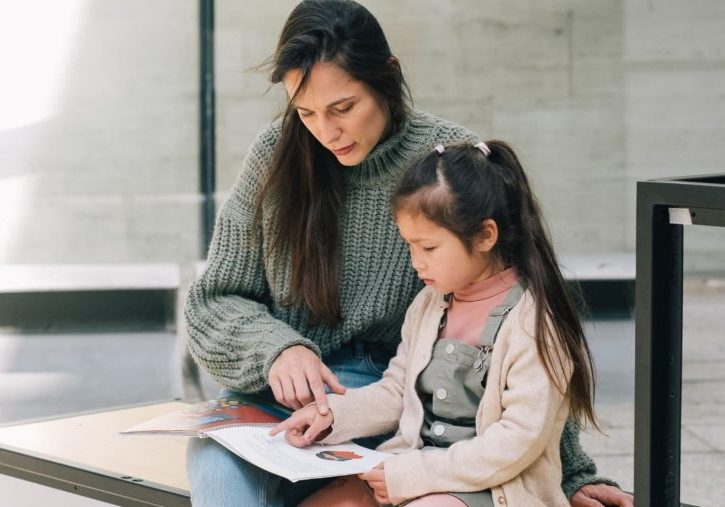
A few days ago I was at a playground with my daughter. There was a misunderstanding with a local girl over a swing. I was frustrated. I was trying to explain, trying to stay calm, trying to do the right thing by my daughter. I spoke in English.
It did not cross my mind to speak in Nepali.
Not once. Not a single word. The language of the country where I live, the language of the girl I was speaking to, the language that might have changed the entire texture of that exchange, simply was not available to me. It was not a decision. It was not a choice. It was an absence.
I only noticed it afterwards. And when I did, it stayed with me.
The Language Your Nervous System Reaches For When Living Between Cultures
There is something that happens when emotions are involved in communication that does not happen in calm, considered exchanges. The parts of your brain responsible for deliberate thought, for choosing your words carefully, for accessing the information you have built up over years of learning, step back. What comes forward is older. More automatic. More deeply wired.
For most people, that older, more automatic layer speaks the language they grew up in. Not the language they learned most recently. Not the language they use most often in daily life. The language in which they first learned to name what they were feeling. The language in which their earliest emotional experiences were stored.
This is not a failure of fluency. It is not a sign that the other languages are less real or less yours. It is simply how language and emotion are organised in the brain. Emotional states are encoded in the language context in which they were first experienced. When those states are activated again, they reach for the same context.
For me, that context is Dutch. It is the language I cried in as a child, the language I was comforted in, the language in which I first understood what it meant to be angry or frightened or sorry. And so when the frustration rose at the playground, Dutch was there. English was close behind it, familiar enough from decades of use to feel nearly as natural. French, Spanish, German, somewhere further back.
Nepali was not in reach at all.
What This Means for Women Living Between Cultures
This is something that many women who live between cultures recognise when they hear it named, even if they have never quite put it into words before.
You have lived in your adopted country for years. You have learned the language, at least enough to function. You can negotiate the school system, follow a conversation at a social gathering, manage the practical demands of daily life. And yet there are moments, the heated ones, the tender ones, the ones where what you are feeling matters more than what you are saying, when the language of where you are simply does not come.
A difficult conversation with a neighbour. A moment of connection with a local friend that suddenly feels fragile. A disagreement at work where the stakes feel high. An interaction at a playground where your child is upset. In these moments, the language you have built so carefully in your adopted country can feel suddenly inaccessible. Like a room you know exists but cannot find the door to.
And this has consequences. Not dramatic ones, not always. But quiet ones.
It means that some of the most emotionally significant exchanges you have in your adopted country happen in a language that is not the first language of the person you are speaking with. Or in your own first language, which they may not understand at all. Or in a shared third language, like English, which belongs fully to neither of you and carries neither of your emotional registers.
This is one of the hidden costs of living between cultures. Not the language barrier in the practical sense. The emotional layer of language that most people never have to think about because they live their whole lives within a single linguistic world.
The Gap That Living Between Cultures Makes Visible
When I thought about that playground exchange afterwards, I found myself wondering what would have happened if I had said even a few words in Nepali. Not a full explanation. Not a careful argument. Just a few words that signalled: I am here. I am trying. I see you as someone I share a language with, even imperfectly.
I do not know whether it would have changed anything. The misunderstanding had already happened by then. But I suspect it would have changed something. The way the exchange felt, if nothing else. The distance between us.
Language carries more than information. It carries belonging. When you speak to someone in their language, even badly, even haltingly, you are making a gesture that has nothing to do with grammar and everything to do with recognition. You are saying: your world is real to me. I am willing to be awkward in it.
I could not make that gesture in the moment. The emotion had already closed the door.
This is what living between cultures makes visible in a way that living within a single culture does not. The gap between the language you know and the language you can access when it matters. The distance between competence and emotional availability. The way fluency, real fluency, is not just about vocabulary or grammar but about having a language wired into the part of yourself that responds before you think.
That kind of fluency takes a very long time. And for some languages, in some bodies, it may never fully arrive. Not because of lack of effort or lack of care. Because of the depth at which language roots itself.
What Understanding This Changes
I am not writing this to suggest that you should feel guilty about the languages you cannot access under pressure. Or that the solution is simply to try harder, to immerse more deeply, to force the emotional layer to develop faster than it naturally does.
I am writing it because naming it clearly changes something.
When you understand why the language of your adopted country disappears in emotional moments, it stops feeling like a personal failing and starts feeling like a structural reality of living between cultures. Something real, and worth accounting for, rather than something to be ashamed of or to work around in silence.
It also opens up a different kind of question. Not how do I fix this, but what do I do with this understanding. How do I build in more grace for the moments when the language is not there. How do I find other ways to signal recognition and care when the words in the right language are not available. How do I talk to my daughter about this, so that she understands something of what she is navigating as she grows up between two linguistic worlds that are about as different from each other as two worlds can be.
These are not questions with clean answers. They are questions worth sitting with. Because sitting with them honestly is closer to understanding the experience of living between cultures than any set of strategies or solutions could be.
If you want to explore the specific exchange that prompted this reflection, the previous article on misreading social signals at the playground goes into that moment in more depth. And if you are looking for a place to begin understanding the broader experience of living between cultures, the free guide is a quiet starting point.
A Closing Thought
My mother tongue is Dutch. It is the language of my childhood, of the people who knew me before I knew myself, of the country I left but never entirely left behind.
Nepali is the language of the country where my daughter is growing up. Where her friendships are forming. Where the playground is. Where the girl with the taking of both ears was trying, in the language her body knew, to say sorry.
I did not speak her language in that moment. I could not.
That is not the end of the story. It is just an honest part of it.
| Reflection questions
When emotions are involved in an exchange in your adopted country, do you notice which language you reach for? What does that language feel like compared to the local one? Have you had a moment where you wished you could access the local language more fully, not for practical reasons but for emotional ones? What was that situation? Is there a language you have learned as an adult that has started to feel emotionally available to you, not just practically? What do you think made that possible? If you are raising children between cultures, how do you think about the emotional layer of the languages they are growing up with? Which language do you think they will reach for when emotions run high? |